Milk Crate Kitchen
Chef Michael Casper — Portland, Oregon
“I fully understand that Milk Crate Kitchen won’t be able to solve hunger, but we can stop somebody from being hungry.”
It’s 7:45 in the morning in Portland’s Northeast Hollywood District.
Most of what has been written about this neighborhood calls it a hidden gem. Words like historic, nostalgic and vintage get thrown around a good bit. They fit.
There are old arcades and local watering holes. Neon signs. Storefronts that have never tried particularly hard to impress anyone. A theater built in 1926 still showing cinema classics and hosting indie film festivals.
You notice things here. The type. The signage. The storefronts. Things that feel worn in, not worn out. Nothing is particularly pretentious, and in avoiding that stigma, somehow much of it has come full circle into what has always been cool to some, and is now hip to everyone else.
After meeting Chef Michael Casper, I would use many of those same words to describe him.
He fits here.
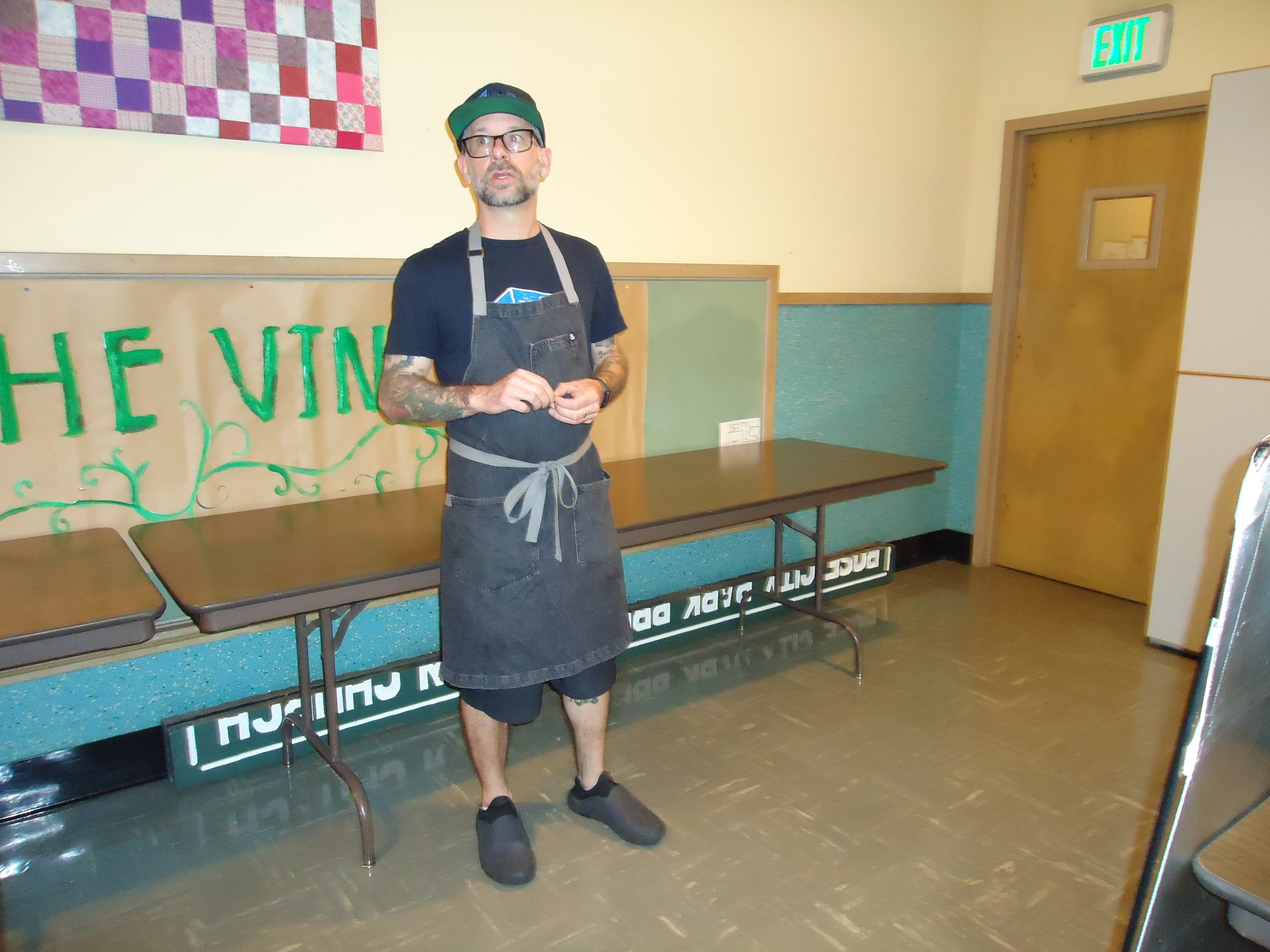
Casper is already moving when we arrive at Milk Crate Kitchen. There is an anxious energy about him, not because anything is wrong, but because there is work to do. Volunteers will be arriving soon, and before they do, he needs to inventory what came in, weigh it, figure out what needs to be used first and start developing the meals they’ll prepare over the next few days.
Lo-fi covers of the ’80s and ’90s music he grew up with fill the room.
Casper was once an executive chef, and that background becomes obvious pretty quickly. There is a system for everything. Where food goes. How it is labeled. What gets used first. What can be preserved. Who does what when the volunteers arrive.
“We run our kitchen the same way we run restaurants,” he says. “Nothing goes to waste, because in the restaurant world, that means better margins.”
The same thinking applies at Milk Crate Kitchen, except they aren’t chasing margins.
They’re trying to make sure good food gets eaten. And the food coming through this kitchen is good.
Fresh brisket trimmings. Artisan bread from one of Portland’s best-known bread makers. Produce that farmers brought to the Saturday market but didn’t sell. Even excess rice from a local Buddhist temple.
This isn’t someone’s leftovers. It isn’t scraps.
“These ingredients are the exact same high quality as you would buy or get from some of the city’s finest restaurants or food trucks.”
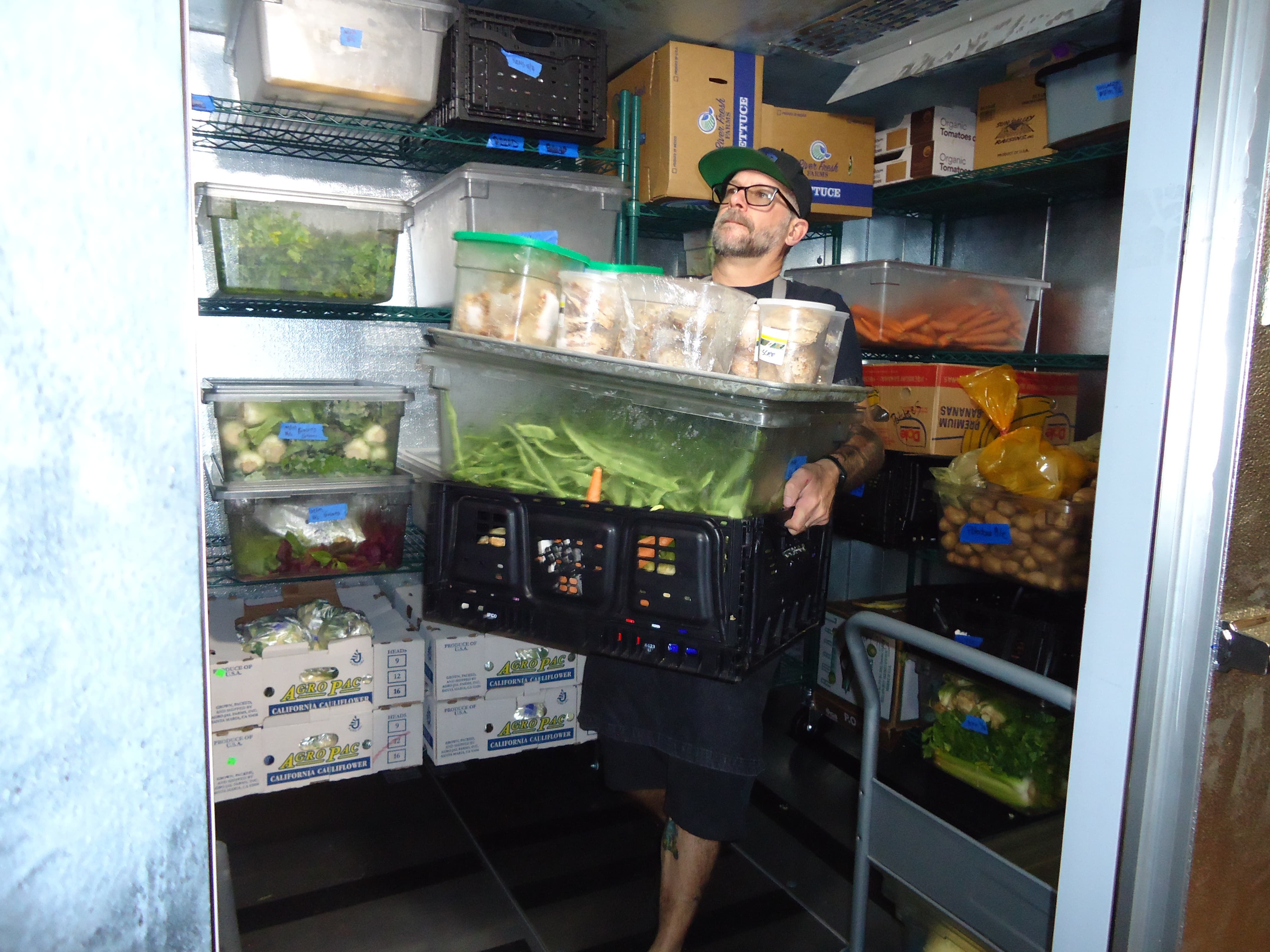
Inside the new walk-in cooler are fresh green beans, onions, squash, boxes of fruit and vegetables. And a lot of cucumbers being pickled.
I ask Casper what’s up with all the pickles?
“We get certain foods that, if we don’t have time to incorporate them into a recipe right away, we have to preserve them and come up with ways to stretch them longer. Pickling is a great way to do that. These will turn into part of a dish weeks from now and make it that much better.”
Nearly every box, container and bag has a small piece of blue tape stuck to it.
Written on that tape is when the food arrived and where it came from.
It’s a simple system, but an important one. Casper and his team need to know what has to be used today, what can wait until tomorrow and what might last a few more days.
Before any of it reaches the shelf, they weigh it.
Every donation that comes through the door is recorded so they know exactly how much food they have kept from going to waste.
By the time we visited in August 2026, Milk Crate Kitchen had diverted more than 26,000 pounds of food and prepared more than 14,000 meals that year.
Those numbers become easier to understand when you’re standing inside the cooler.
Fresh food has a clock attached to it. A farmer can grow it, harvest it, transport it and bring it to market, and it can still go uneaten simply because there wasn’t a buyer for the last box. A restaurant can order too much. A bakery can make more bread than it sells. An event can end with perfectly good food still sitting in the kitchen.
None of those things make the food bad. They just leave it with nowhere to go. Casper has become very good at giving it somewhere to go.
Back in the kitchen, the volunteers begin arriving. Some are retired. Others have carved a few hours out of their week to help. Many are regulars, and they seem to know the rhythm of the place.
The room changes quickly.
Cutting boards come out. Knives start moving. Pans begin filling. Someone is chopping vegetables while someone else is already washing what was just used. Casper moves in between it all.
There isn’t a set menu waiting for them. In the best way, the food itself determines what they are cooking.
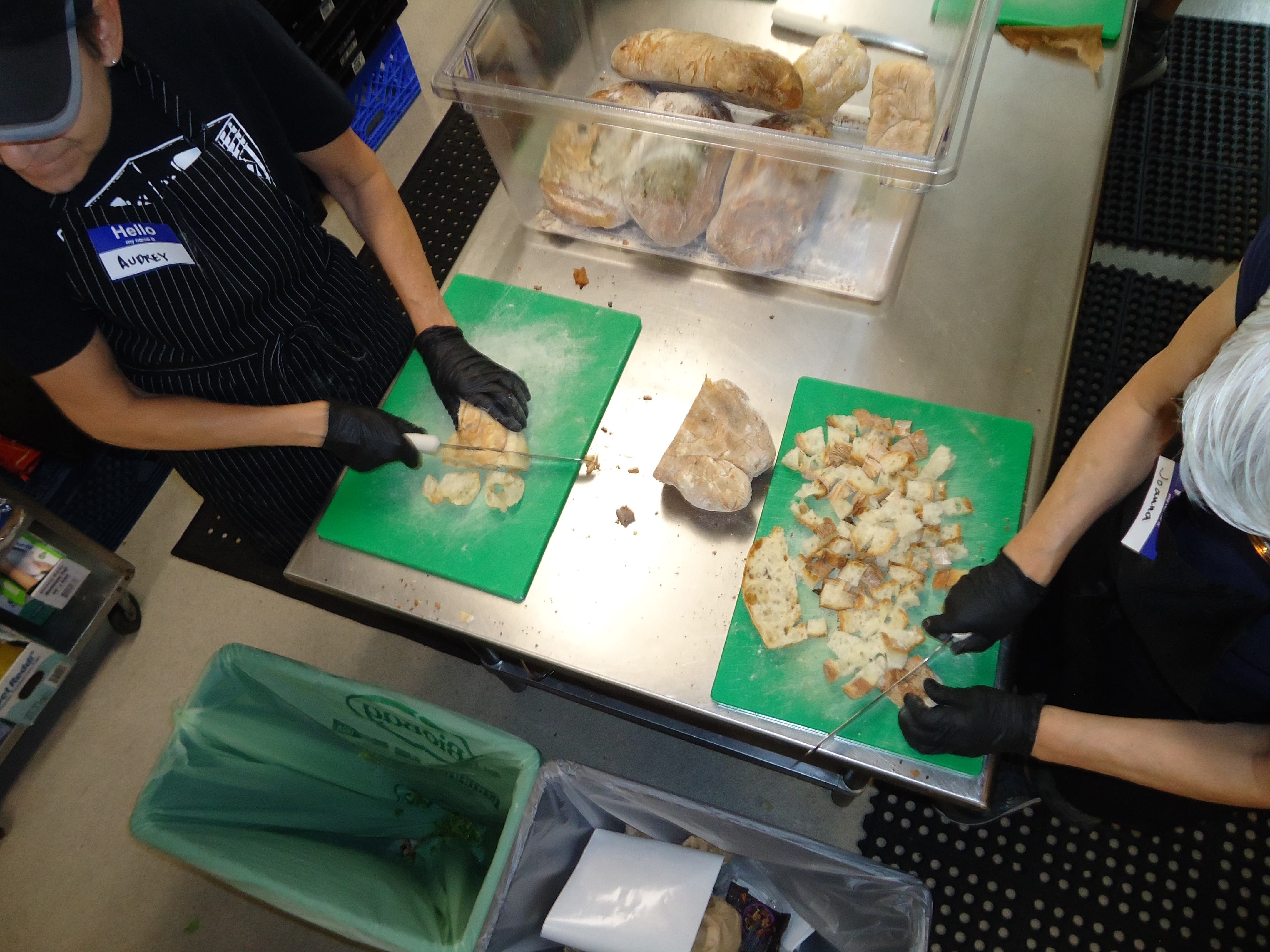
Today, artisan bread becomes cinnamon-vanilla bread pudding. White rice, pork, spring peas, celery, onions, carrots and eggs become bánh mì fried rice.
And within a couple of hours, 100 take-home containers need to be filled, closed and refrigerated so local partners can pick them up and get them to people who need a meal.
This is where Casper’s restaurant background feels most visible.
There is urgency without panic. Everyone has something to do. Very little movement is wasted. Ingredients that arrived separately from different corners of Portland begin leaving the kitchen as meals.
Milk Crate Kitchen is able to do this at a remarkably low cost, just 56 cents per meal, in part because nearly all of the food is donated and so much of the work is done by volunteers.
But Casper doesn’t talk much about cheap food.
He talks about good food.
There’s a difference.
“Even those in need will come to see that they are being treated better than they expected,” he says. “We want to offer that to everyone. It’s about human dignity.”
That distinction seems to drive much of what happens here.
The goal isn’t simply to get calories into containers. Someone is going to open this later. Someone is going to serve it to their family. Someone is going to sit down and eat it.
Casper wants it to be something he would serve.
And maybe that is why the relationship between food waste and hunger feels less complicated inside this kitchen than it does when we talk about it in statistics.
On one side of Portland, there is perfectly good food without a destination. On another, there is someone who could use a good meal. Casper has spent the last several years figuring out how to close the distance between the two.
He knows the limits of what one small kitchen can accomplish.
He says so himself.
“I fully understand that Milk Crate Kitchen won’t be able to solve hunger, but we can stop somebody from being hungry.”
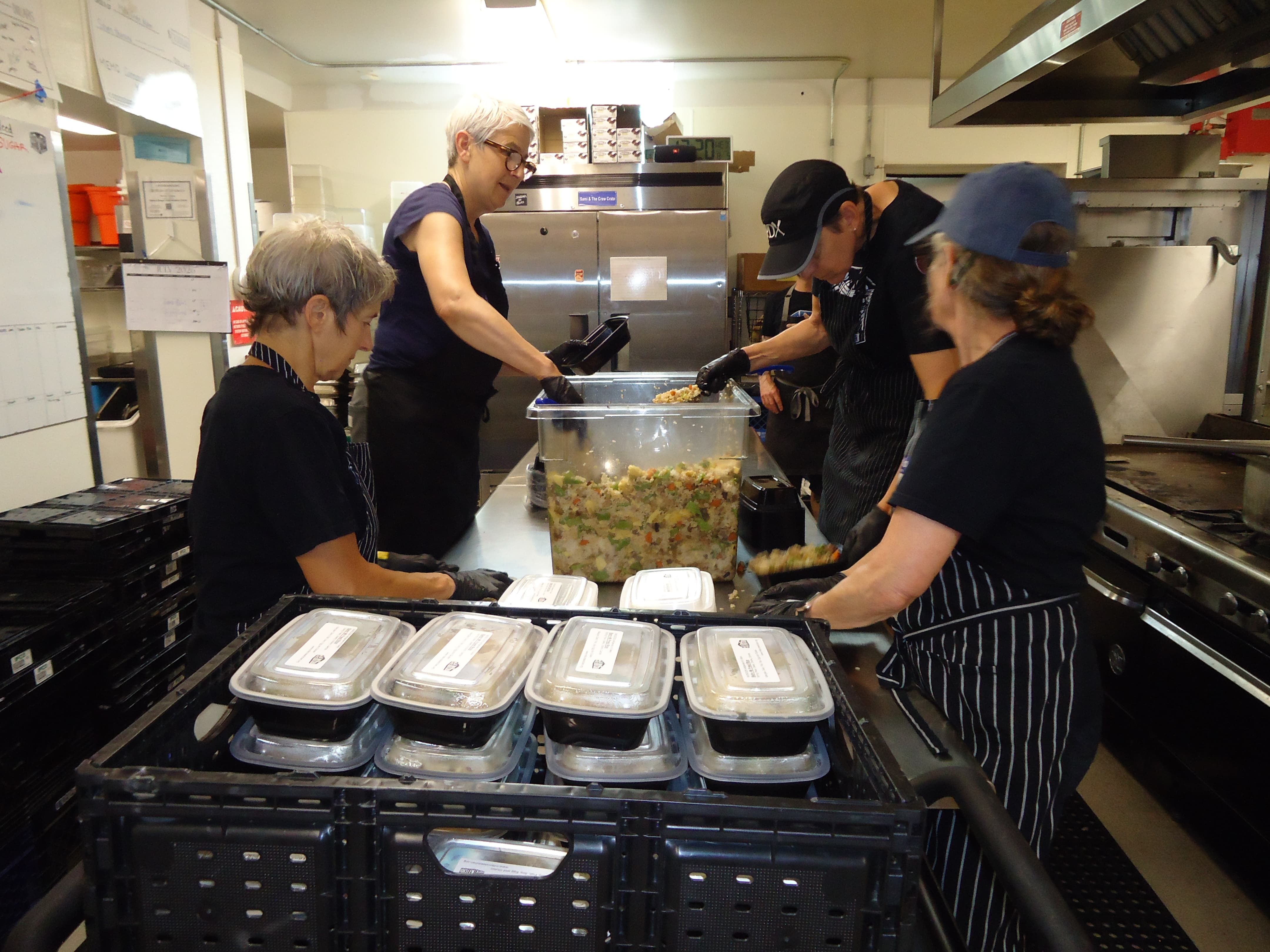
By the afternoon, the containers are lined up. The food that was sitting in boxes, coolers and market stalls across Portland only days before is now lunch or dinner.
Soon, another local organization that helps with distribution will come to pick it up.
And tomorrow morning, Casper will come back and see what showed up.